
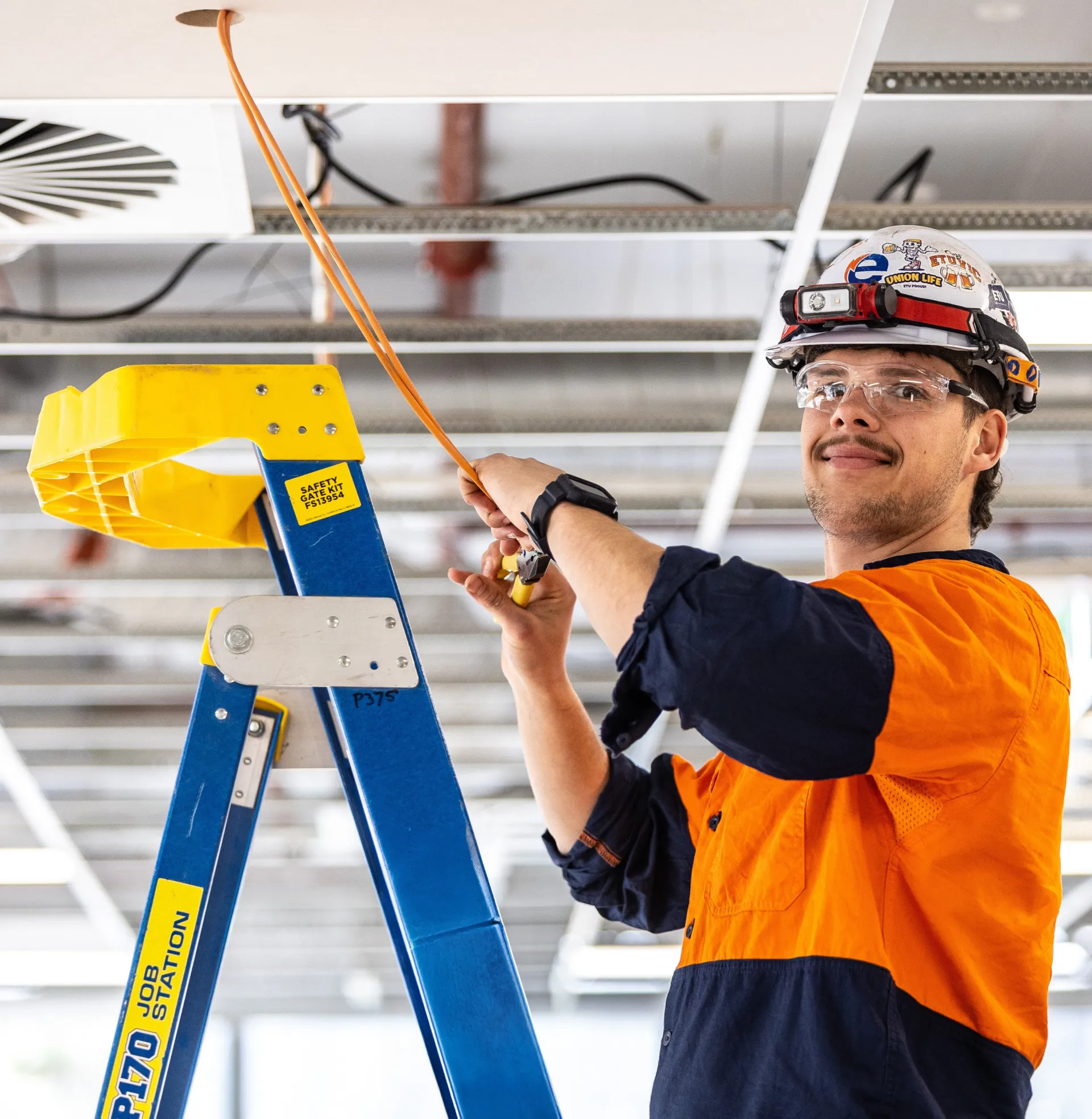
What does an electrician do?
Electricians use their technical skills and knack for problem solving to install and test electrical systems as well as diagnose and sort out electrical issues. They work efficiently and make sure everything is safe.
On the job, electricians will:
- Install switchboards, control systems and equipment
- Test circuits using specialised tools
- Repair faulty components
- Ensure all work meets Australian safety standards
Where can an electrician career take you?
Being an electrician gives you the flexibility to specialise across residential, commercial or industrial sectors as an electrician. Your career can develop in different industries like construction, mining, manufacturing, energy and telecommunications.
How much do electricians earn?
As one of the higher paid trades in Australia, you can earn around $90,000 - $110,000+ per year as a qualified electrician.
During an apprenticeship you are paid under an award, depending on your age and level of apprenticeship, which increases each year. The average wage for an apprentice can range from $500 to $1,000+ per week.

Apprenticeship length
4 years

Qualified Electrician Average Salary
$93,000 (sourced from Seek.com)

Industries
Construction, mining, energy, telecommunication
How to become an electrician
An electrical apprenticeship combines on-the-job training with studying towards a nationally recognised qualification—a Certificate III in Electrotechnology (Electrician)—at TAFE and other Registered Training Organisations.
The basic entry requirements to become an apprentice electrician in Australia are:
- Minimum Year 10
- Basic mathematics and English skills
- Strong interest in safety compliance
Some employers may require you to complete a pre-apprenticeship course, like a Certificate II in Electrotechnology, which gives you a head start in the field.
You can start your electrician apprenticeship journey at any time, at any age – whether you’re a school leaver or changing careers later in life.
Who an electrician career would suit
Working as an electrician is a hands-on trade that fits people who are:
- Investigative
- A problem solver
- Detail-oriented
- Safety conscious
Electrician work offers opportunities across Australia, with career progression into specialist areas, such as solar, across residential, commercial and industrial sectors, and supervisory roles.
Frequently Asked Questions (FAQs)
An electrical apprenticeship will typically take around 4 years to complete.
An electrical apprenticeship teaches you what is involved in installing and keeping the electrical systems in home and businesses running smoothly.
You'll gain practical experience and a Certificate III in Electrotechnology (Electrician) over four years as an apprentice.
Under the supervision of qualified electricians, you’ll learn how to:
- Install wiring systems, accessories and appliances for low voltage general electrical installations
- Connect electrical circuits
- Solve problems related to electrical equipment
- Use drawings, diagrams, schedules, standards, codes and specifications
No – school-based apprenticeships can start in Year 10. You can start your career as an electrician at any time. You can find out more about school-based apprenticeships here.
You need the minimum Year 10 education with basic mathematics and English. Some employers may require a White Card or driver’s licence. Some employers may even want you to complete a Certificate II before starting an electrical apprenticeship.
Apprentices are paid under an award, depending on your age and level of apprenticeship, which increases each year. Average wages can range from $500 to $1,000+ per week.
No. If you’re still in school and don’t have your driver’s licence, you can still start a school-based apprenticeship. For adult apprentices, it’s not always required but it is highly recommended, especially for site-based work.
It's easy to apply for a electrical apprenticeship through MEGT’s Job Board.
Step 1. Click “Job Board” in the top right-hand corner of our website
Step 2. Search for ‘electrician’ or 'electrical' on our Job Board
Step 3. Apply for one of the many apprenticeship opportunities. If you’re starting out, look for a 1st year apprenticeship.
Step 4. Study and work as an apprentice for four years
Step 5. Land a job! Remember to use your new industry contacts and MEGT's job ready support
After completing your apprenticeship, you can work across Australia as a qualified electrician, specialise in areas, such as solar, or you can progress into supervisory roles.
You can work across construction, mining, manufacturing, energy and telecommunications throughout Australia.
Attending TAFE or courses with other Registered Training Organisations varies across each state. It is usually through block release or day release, alongside full-time work. These are arrangements that authorise time off from work to complete studies.
Certificate II refers to a nationally recognised qualification that prepares you for the workplace or academic studies. While it’s not required, it may help you prepare for a Certificate III.
Some companies may require you to complete a Certificate II before starting an apprenticeship with them, so you'll need to read apprenticeship job descriptions carefully.
Ready to start your apprenticeship?
Search the MEGT Job BoardWhy do an apprenticeship?

Earn while you learn
Get paid while you gain hands-on experience with your employer

Combine theory and practice
Get classroom learning like TAFE to get the right mix of practical skills and theory
Get set up for success
Receive ongoing training, guidance, and supervision to help you succeed in your new job

